
Best OBS Noise Suppression Plugins: Free, Paid, VST and AI Options
The best noise suppression option for OBS depends on the noise you hear, your voice and the setup you can run. A quiet fan and a keyboard beside your microphone are different problems.
Start with OBS’s free filter if you have not tried it. If it cuts off words or changes your voice too much, compare alternatives using a short recording of your own voice, including typing and quiet speech.
Want a simple alternative to RNNoise?
NoiLess is an AI noise-removal plugin you can use in OBS. Choose from three modes to reduce background noise around your voice. Try the free trial with your microphone before choosing the full version.
- Quick comparison: free, VST and AI options
- OBS Noise Suppression: the free starting point
- NoiLess: three-mode AI cleanup for spoken streams
- ReaPlugs ReaFIR: free VST2 for a steady noise floor
- Bertom Denoiser Classic: free or pay-what-you-want denoising
- Noise Suppression for Voice: configurable RNNoise for advanced users
- NVIDIA Noise Removal: an option for compatible RTX owners
- Waves Clarity Vx: voice-focused AI noise reduction
- Supertone Clear: separate control of voice, noise and room reverb
- iZotope RX: choose the exact real-time plug-in, not just the suite name
- iZotope VEA: broader voice enhancement
- How to load noise-suppression plug-ins in OBS
- How to decide whether a plug-in is worth buying
- Which one should you try first?
Quick comparison: free, VST and AI options
| Your priority | Options to compare | Important difference |
|---|---|---|
| Free, no extra installation | OBS RNNoise / Speex | RNNoise is automatic; Speex has an adjustable level |
| Simple speech cleanup | NoiLess trial | Windows VST3; test voice preservation first |
| Steady fan noise or hiss | ReaFIR / Bertom Denoiser Classic | Traditional denoisers, not speech-separation AI |
| Already own a compatible RTX GPU | NVIDIA Broadcast / Noise Removal | Hardware and driver requirements apply |
| More control over voice and room sound | Clarity Vx / Supertone Clear | Clear also provides separate voice-reverb control |
| Edit recordings as well as stream | iZotope RX / VEA | Check the exact edition, plug-in and real-time compatibility |
These are use-case recommendations, not results from a controlled head-to-head benchmark. The sections below explain which options are worth testing and what each setup involves.
OBS Noise Suppression: the free starting point
Open your microphone’s Filters → + → Noise Suppression. Try RNNoise, then compare it with no suppression at a similar playback volume.
RNNoise gives you automatic voice-focused suppression without a strength slider. Speex lets you adjust suppression: a more negative value means stronger processing. Start gently if RNNoise affects your voice.
Neither option needs a paid plug-in. If your words remain clear and the remaining noise is not distracting at stream volume, there may be nothing to buy.
NoiLess: three-mode AI cleanup for spoken streams
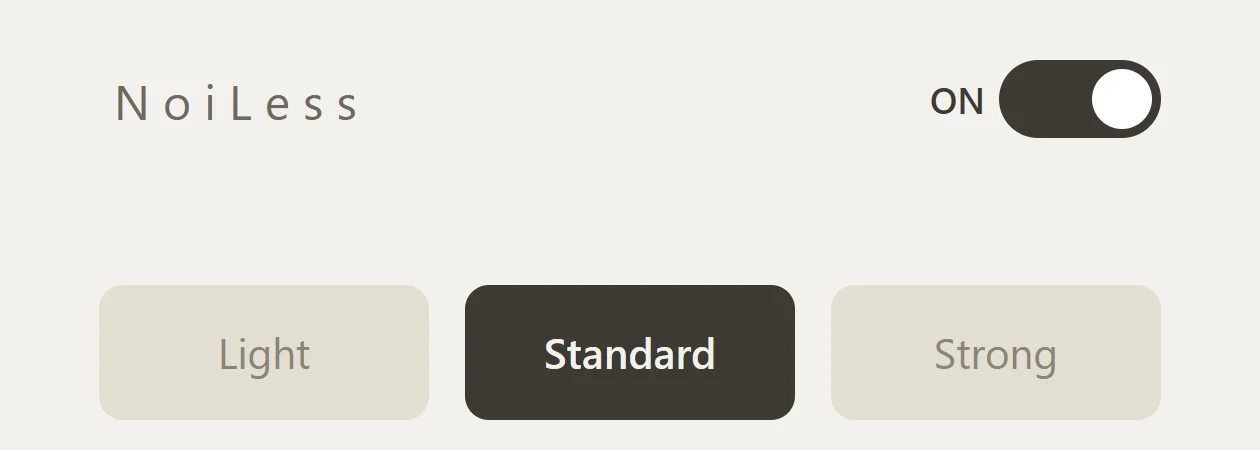
NoiLess is aimed primarily at spoken voice: chatting, gaming streams and tutorial recordings. It is a practical option when you want a small set of controls instead of a full audio restoration suite.
Start with Standard. Compare Light if you want less processing, or Strong if the remaining noise is more distracting. A stronger setting is not automatically a better result.
- Platform: Windows 64-bit, VST3
- OBS setup: install a VST3 host, then scan and load NoiLess
- Trial: free, with a roughly 2-second mute every 45 seconds
- Full version: ¥1,480 on BOOTH at the time of checking
Record soft words, laughter and keyboard use as well as ordinary speech. If you want to use it for singing or other non-speech audio, test a recording of that actual use before deciding.
The developer documents about 40ms of processing latency. This is not a measurement of your complete audio path. Check a recording rather than blindly entering −40ms in OBS.
Read the official product page and setup guide for requirements. The developer’s documentation is currently in Japanese.
ReaPlugs ReaFIR: free VST2 for a steady noise floor
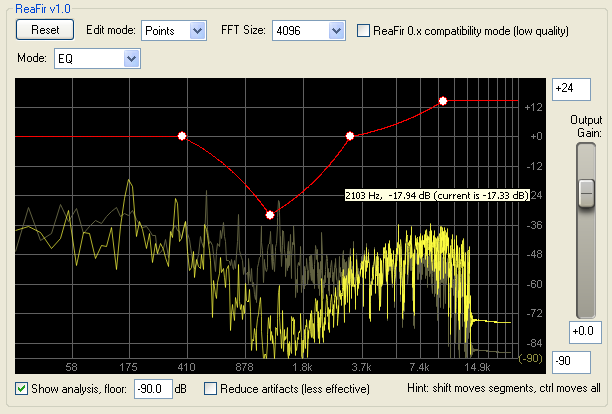
ReaPlugs is a free Windows VST suite. ReaFIR’s Subtract mode is useful for a fairly constant noise profile, such as steady fan noise or hiss.
In a typical noise-profile workflow, stay silent while it learns the background, then turn off automatic profile building before speaking. Learning your voice as part of the noise can remove parts you want to keep.
ReaFIR can load through OBS’s VST2 filter with a compatible installation. Its FFT processing involves tradeoffs, including latency; do not select it on the assumption that every setting is delay-free.
Bertom Denoiser Classic: free or pay-what-you-want denoising
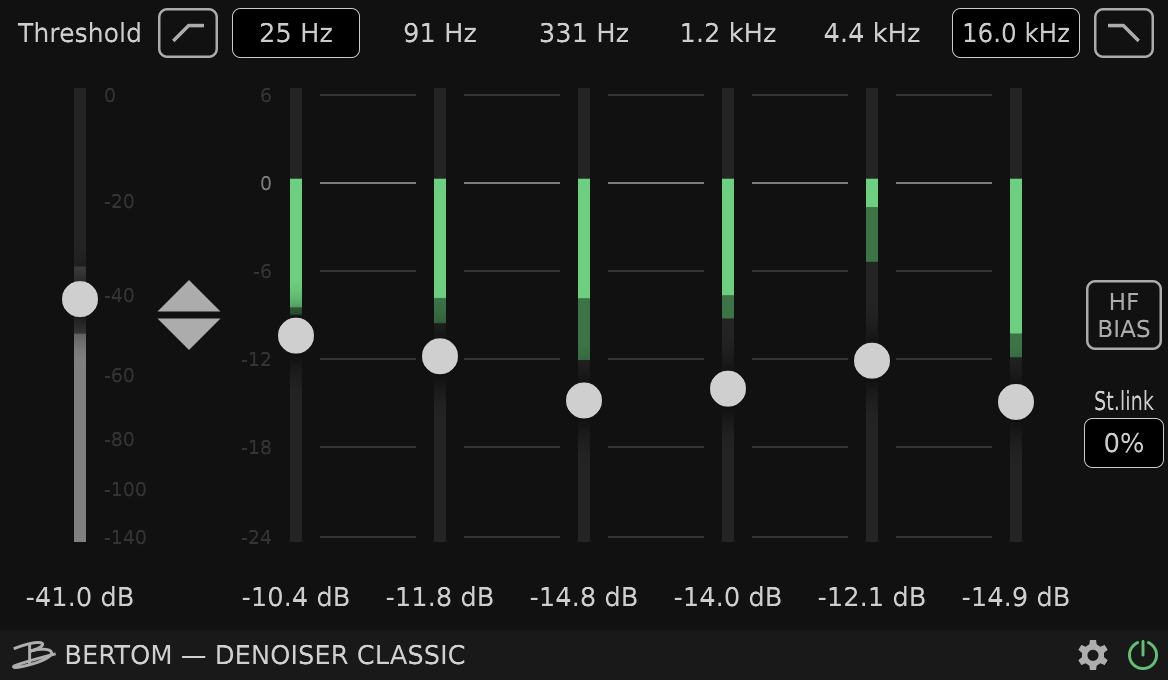
Bertom Denoiser Classic is a traditional denoiser offered on a pay-what-you-want basis, including free. The developer describes it as low-CPU and zero-latency.
It is worth considering for live cleanup when you want to adjust noise reduction without a speech-only AI model. It does not automatically separate every keyboard click from an overlapping word.
Use the VST3 build through an OBS VST3 host. The plug-in’s stated zero latency does not mean your microphone, host and monitoring path have zero latency.
Noise Suppression for Voice: configurable RNNoise for advanced users
Noise Suppression for Voice is a free RNNoise-based project with controls such as voice-activity thresholds and grace periods.
Its main reason to consider it is configuration flexibility, not a guaranteed quality upgrade over OBS RNNoise. Read the selected build’s installation instructions, including the 48kHz requirement and available plug-in formats.
Some settings can trade delay for keeping the start of speech. If the built-in filter already sounds right, you do not need a more technical setup just because it has more controls.
NVIDIA Noise Removal: an option for compatible RTX owners
NVIDIA Broadcast is a separate application, not a VST. With a compatible Windows/RTX setup, it can process a microphone and present the result as an input you select in OBS.
OBS also has an NVIDIA noise-removal integration when its required SDK components are installed. These are different installation paths; follow the instructions for the route you use.
If you already have supported hardware, it is worth comparing before purchasing a plug-in. Check during a real game, since available GPU resources matter. Avoid processing the same voice through Broadcast, OBS RNNoise and another strong denoiser all at once.
Waves Clarity Vx: voice-focused AI noise reduction
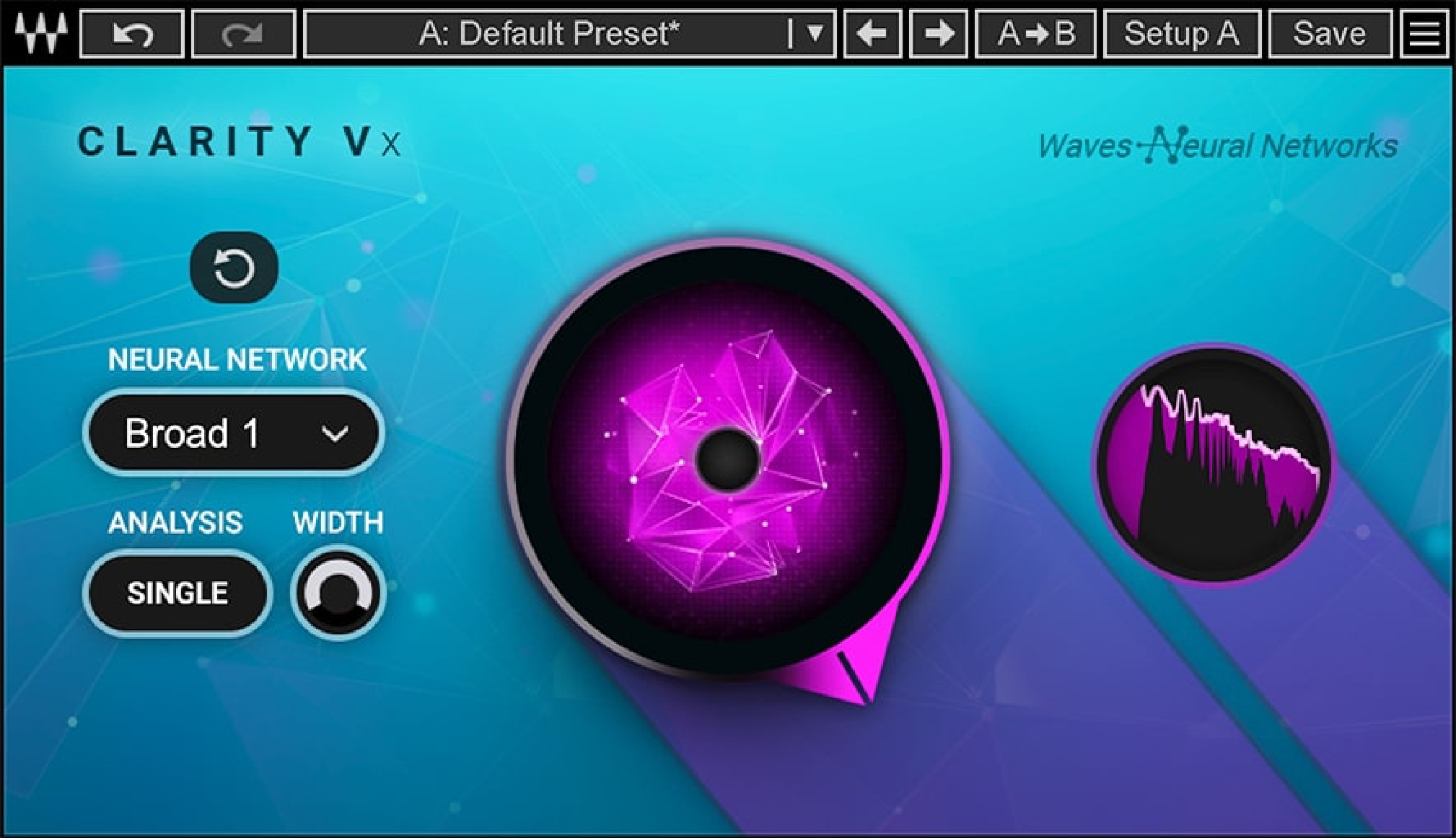
Waves Clarity Vx is a paid option to compare for voice cleanup. Start with restrained processing and listen to the ends of words as well as the background.
Check the Waves-specific OBS installation route before buying. Waves documents using its plug-ins through StudioVerse Audio Effects in OBS, with stereo instances. Do not assume a Waves installation will simply appear as a normal standalone VST2 entry. See Waves’ OBS instructions.
Waves currently lists Intel-based Macs only for its StudioVerse-for-OBS route. Do not treat general Apple silicon support in a different host as confirmation that this OBS setup is supported.
Supertone Clear: separate control of voice, noise and room reverb
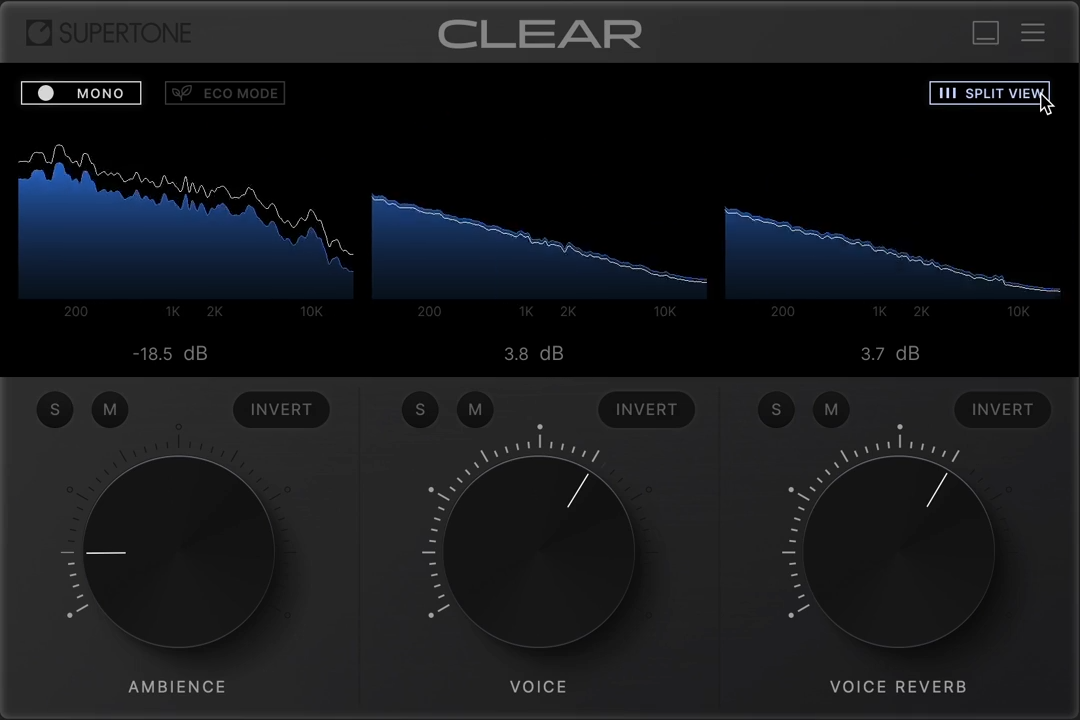
Supertone Clear provides controls for voice, ambience and voice reverb. It is relevant when the room’s reflections are part of the problem, not just fan noise.
First try moving the microphone closer and reducing room reflections. Then compare the official trial and requirements with your voice. Noise reduction and room-reverb reduction are different jobs, so a dedicated reverb control may be more useful than making a general denoiser stronger.
Is there a free alternative to Supertone Clear?
For background-noise reduction, start with OBS RNNoise or Speex, then compare ReaFIR or Bertom if needed. These are not direct replacements for Clear’s separate voice-reverb control. If room echo is the main problem, microphone placement and softer room surfaces are useful first steps.
Clear’s free trial is for evaluation, not an uninterrupted free streaming edition: it adds noise every 60 seconds and does not save/load profiles. NoiLess also has a periodic trial mute. Use trial versions for test recordings before choosing what to run on a live broadcast.
iZotope RX: choose the exact real-time plug-in, not just the suite name
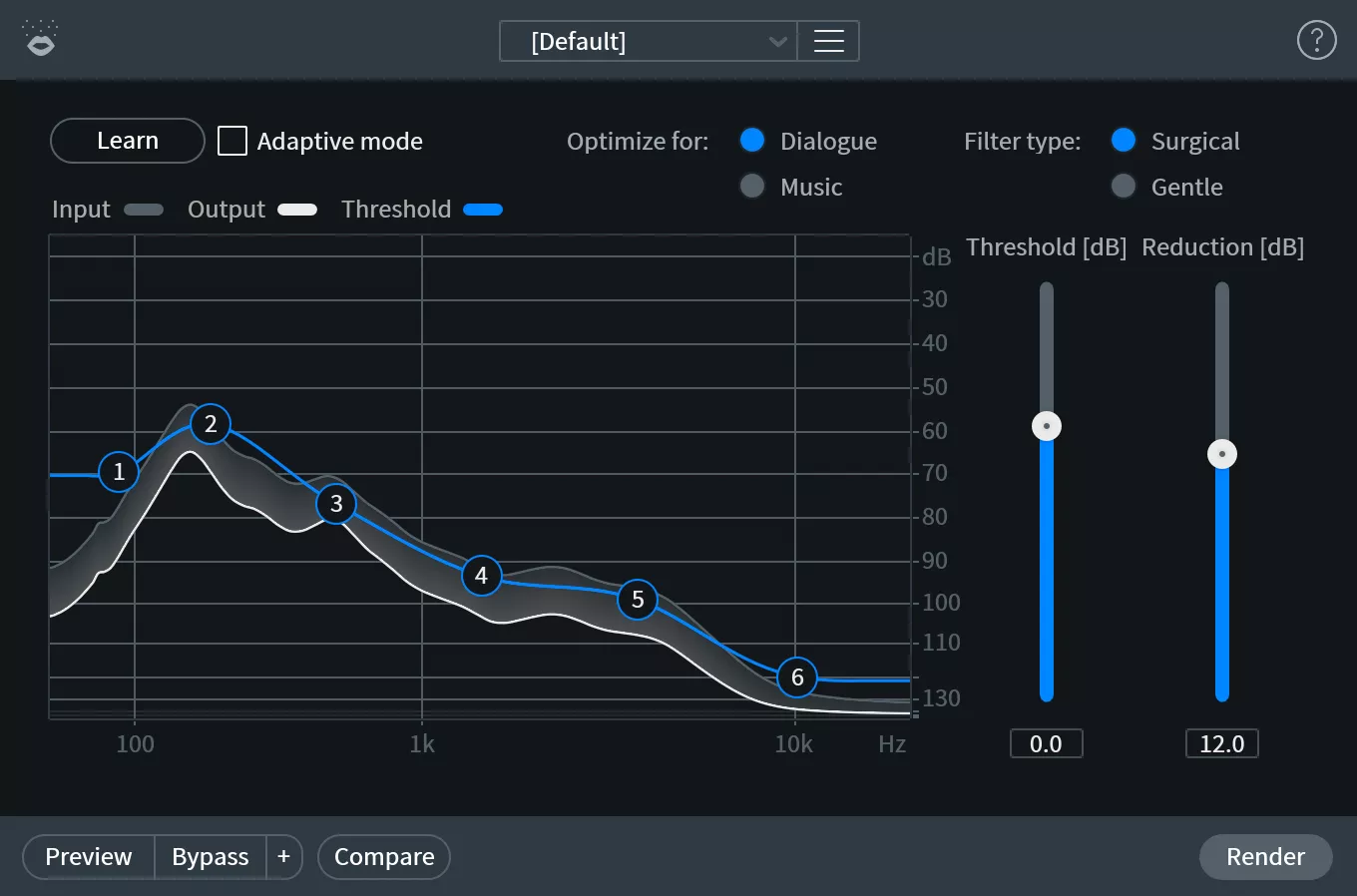
RX is especially worth considering if you also repair recordings and edit videos. For live OBS use, check which plug-ins are included in the exact edition and version, and which processing modes are suitable for real time.
The current RX 12 Elements includes Voice De-noise and De-click. Mouth De-click is a different tool, listed in Standard and Advanced rather than Elements. Choose by the actual tool you need, not simply by the RX name.
An older iZotope RX Elements listing may not contain the same tools as the current RX suite or a different edition. Check the seller’s included-plug-in list before purchasing. The standalone editor and its offline processing do not automatically become live OBS filters.
iZotope VEA: broader voice enhancement
iZotope VEA combines voice-tone, level and cleanup controls. It is a different kind of purchase from a tool whose only job is reducing background noise.
If you mainly want quieter typing, start by comparing denoisers. If you also want help with overall spoken-voice tone and levels, check VEA’s requirements and try it in your actual host before relying on it for a live stream.
How to load noise-suppression plug-ins in OBS
OBS’s built-in VST 2.x Plug-in filter is for compatible VST2 plug-ins. It does not load VST3. For VST3, install a host such as atkAudio Plugin, add it to the microphone, scan for plug-ins and load the product there.
The checked atkAudio 0.34.0 release requires OBS 31.1.1 or newer and a 64-bit environment. The host’s operating-system support does not override a plug-in’s own requirements: for example, NoiLess is Windows-only.
The host developer lists Windows 11, macOS 12 or a recent major Linux distribution. A plug-in supporting an older OS does not guarantee that the latest host supports it too.
Follow How to use VST3 plug-ins in OBS for the setup. A reasonable spoken-voice chain is noise suppression → compressor → expander if needed → limiter. You do not have to use every filter.
How to decide whether a plug-in is worth buying
- Set a stable microphone distance and an input level with headroom
- Record ordinary speech, soft words, laughter and typing with suppression OFF
- Turn on one denoiser and record the same situations
- Compare at a similar listening level, including with game audio or BGM
- Check for cut-off words, unnatural tone, dropouts and audio/video sync
A gate or expander reduces quiet sections. It does not remove the keyboard from your voice while the gate is open. Microphone distance and pickup pattern also matter more than simply labeling a microphone “dynamic” or “condenser.”
If processed speech is late relative to your camera, delaying that speech further is not the answer. Reduce the audio-path delay or delay the earlier video as appropriate. If two audio sources differ, delay the earlier source to match. Judge the recording, not just the sound returned to your headphones.
Which one should you try first?
Use the built-in filter if it already works. Try ReaFIR or Bertom for steady noise, or an available NVIDIA option if your hardware supports it. Choose Clear when separate room-reverb control is important.
For a straightforward Windows voice-denoising option, try NoiLess with your own microphone. Buy the full version only after checking that your words still sound natural. This is a better basis for choosing than a promise that one plug-in is “best” for every voice.
Product conditions checked September 7, 2026. Prices and compatibility can change; confirm the current product and checkout pages.